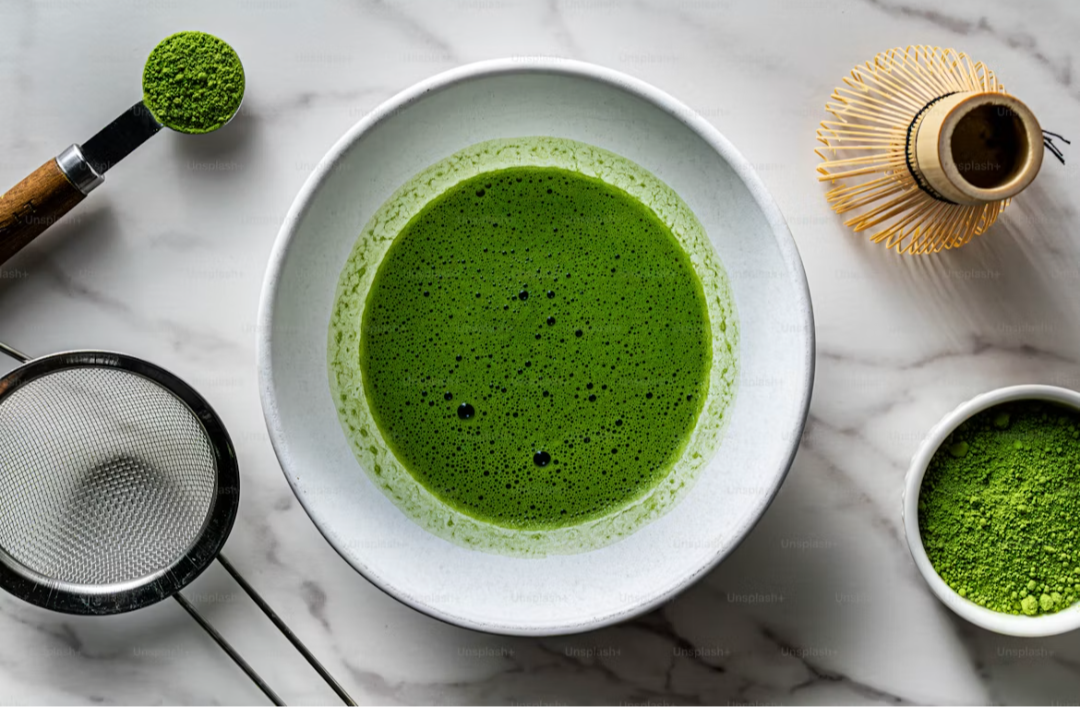
What is Matcha?
Matcha is a vibrant green powdered tea made by finely grinding shade-grown tea leaves (called tencha) using a traditional stone mill. Unlike regular green tea or sencha, which is brewed by steeping the leaves in hot water and then discarding them, matcha is made by dissolving the entire ground leaf into hot water. This means you consume the whole leaf, allowing you to absorb all of its nutrients — including vitamins, catechins, and theanine — without any waste.
In recent years, matcha has grown far beyond Japan, becoming a global favorite among health-conscious consumers. Today, “matcha” is a familiar name on café menus and in desserts around the world.
Where Does Matcha Come From?
Some of the most renowned matcha-producing regions in Japan include Uji in Kyoto, Yame in Fukuoka, and Nishio in Aichi.
Uji matcha has the longest history and is widely regarded as the birthplace of Japan’s matcha culture. It’s known for its rich aroma and elegant sweetness, earning it a reputation as one of the finest matcha varieties in the world.
Yame matcha is grown by taking advantage of Kyushu’s warm climate and significant temperature difference between day and night, resulting in a deep umami flavor and rich body. In recent years, it has gained growing recognition as a producer to rival Uji.
Since flavor and aroma vary by region, comparing different origins is one of the true pleasures of enjoying matcha.
Types of Matcha
Matcha is generally divided into two main grades: Ceremonial Grade and Culinary Grade.
Ceremonial grade matcha is made using only the youngest, most tender tea buds, resulting in a top-quality powder with a vibrant green color, smooth texture, and elegant sweetness. It’s crafted specifically to be whisked with hot water and enjoyed on its own, as in the traditional tea ceremony.
Culinary grade matcha, on the other hand, is made from slightly more mature leaves and has a stronger, more astringent flavor. This makes it well-suited for mixing with other ingredients — such as in lattes, baked goods, and cooking.
Within ceremonial grade matcha, there are also two traditional preparation styles: koicha (thick tea) and usucha (thin tea).
Koicha is prepared using a larger amount of matcha with less water, kneaded into a thick, syrupy consistency. It’s considered the most formal style in the tea ceremony and is made using the highest-quality matcha from older tea trees, offering an intensely rich aroma, sweetness, and umami.
Usucha, on the other hand, uses less matcha and more water, whisked into a light, frothy drink. This is the style most people are familiar with — it’s the type of matcha typically served at cafés around the world.
Neither style is inherently better than the other — it simply comes down to choosing the right grade for the right purpose. Ceremonial grade (and koicha, for special occasions) is best enjoyed on its own, while culinary grade is ideal for lattes and baking.
How to Identify Authentic, High-Quality Matcha
As matcha has grown in popularity worldwide, an unfortunate side effect has emerged: a rise in low-quality imitations, and even green tea powder being sold as “matcha.” Here are the key points to check when choosing authentic, high-quality matcha.
1. Check the Color
Genuine, high-quality matcha has a vivid, bright green color. If the powder looks dull, yellowish-green, or brownish, it may be degraded or made from lower-quality leaves.
2. Check the Aroma
Good matcha has a fresh, grassy aroma with a subtle natural sweetness. Be cautious if the smell is overly grassy/vegetal or if there’s almost no aroma at all.
3. Check the Ingredient List
Look for packaging that lists only “100% Matcha” or “Matcha Green Tea Powder (100%).” If sugar, flavorings, or other types of tea leaves are mixed in, it can’t truly be called authentic matcha.
4. Check the Place of Origin
Look for a clearly stated Japanese origin, such as Uji, Yame, or Nishio. Matcha with no listed origin may have inconsistent quality.
5. Check the Price
Because growing and processing high-quality matcha is labor-intensive, genuine matcha typically comes at a fair price. Be wary of matcha that’s priced unusually low.
How to Prepare Matcha the Traditional Way
Preparing matcha the right way brings out its full flavor and aroma. Here’s a simple step-by-step guide to enjoying an authentic cup at home.
-What You’ll Need-
Matcha (ceremonial grade recommended)
A chasen (bamboo whisk)
A tea strainer (sifter)
Hot water (around 80°C / 176°F)
A matcha bowl or a wide-mouthed cup
-Steps-
1.Sift the matcha
Matcha powder tends to clump, so sifting it beforehand helps it dissolve smoothly.
2.Heat the water to around 80°C (176°F)
Using freshly boiled water (100°C) will make the matcha taste overly bitter. Let boiled water cool slightly, or use a thermometer to check the temperature.
3.Add the matcha and water to the bowl
Add about 2g (roughly 1 teaspoon) of matcha, then pour in 60–70ml of hot water.
4.Whisk with the chasen
Hold the bowl steady with one hand, and whisk briskly in a “W” or “M” motion using your wrist. Continue for about 20–30 seconds, until fine, smooth foam forms on the surface.
5.Enjoy
Once the foam is fine and creamy, your matcha is ready. Enjoy it right away for the best flavor.
Easy Way to Enjoy Matcha : Matcha Latte
While mastering the traditional whisking method is rewarding, sometimes you just want an easy way to enjoy matcha — and that’s where the matcha latte comes in. Its gentle sweetness and creamy texture make it an approachable option, even for matcha beginners.
Making It the Traditional Way
Simply pour warm milk (or your favorite plant-based milk, such as soy or oat) over freshly whisked matcha, and you’ll have a café-style matcha latte at home. Add a touch of honey or syrup if you like it a bit sweeter.
The Easy Way: Tsujiri Matcha Latte
If whisking with a chasen feels a little intimidating, Tsujiri Matcha Latte is a great option. This instant-style latte lets you enjoy authentic matcha flavor with nothing more than hot water — simply add hot water and stir. Made by Tsujiri, a long-established, prestigious tea house from Kyoto, it’s crafted with genuine care for quality, making it perfect for anyone who wants a taste of real matcha, even on a busy day.
Final Thoughts
Matcha is far more than just a “green drink” — it’s a traditional Japanese tea steeped in centuries of history and culture, from how it’s grown and processed to how it’s whisked and enjoyed. Whether you’re comparing the flavors of different regions, trying your hand at whisking a bowl the traditional way, or simply reaching for a quick matcha latte on a busy day, there’s a way to enjoy matcha that fits your own pace.
When choosing authentic matcha, remember to check the color, aroma, ingredient list, origin, and price. We hope this guide helps you find the perfect cup of matcha for you.

コメント